Black Paper — Deep Matt Stock, Wholesale in Delhi
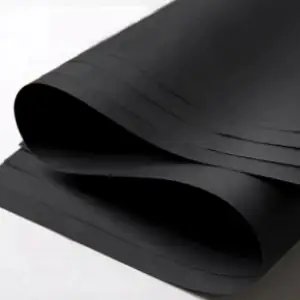
Not all black paper is the same black. The distinction the trade cares about is whether the sheet is coloured through the pulp or blackened at the surface: dyed-through stock shows black at every cut and crease, while surface-blackened stock reveals a grey or white core the moment it is trimmed. On a rigid box wrap, a mount or a folded cover, that edge is in plain view.
A matt surface matters for the same reason. Gloss reflects, and reflection reads as grey; a deep matt sheet absorbs light and holds the black. That is why matt black is standard for luxury packaging interiors and wraps, photographic and artwork mounts, portfolio and album pages, presentation folders and retail inserts.
Two practical points. Black stock is often specified alongside foiling, spot UV or screen printing, since CMYK cannot lift artwork off a dark ground. And any black sheet in contact with a light-coloured product should be checked for rub-off. Tell us the finished application when enquiring.
Specifications
- Finish
- Deep matt, low reflectance
- Colouring
- Dyed-through or surface-blackened — specify which the job needs
- Weights
- Paper and card weights
- Decoration
- Foiling, spot UV and screen printing, since CMYK cannot lift artwork off a dark ground
Typical applications
- Luxury packaging interiors and wraps
- Rigid box wraps
- Photographic and artwork mounts
- Portfolio and album pages
- Presentation folders
- Retail inserts
Black Paper — what buyers ask
Is black paper dyed through or just coated black?
Both are sold, and the difference is visible at every cut and crease. Dyed-through stock is coloured in the pulp, so a trimmed edge, a score or a die-cut window stays black. Surface-blackened stock shows a grey or white core the moment it is cut. On a rigid box wrap, a mount or a folded cover that edge is in plain view, so specify dyed-through for those jobs.
What gsm black paper is used for rigid boxes and mounts?
Indian listings for black stock commonly advertise a 250, 300, 400 and 500 gsm ladder, with 31x43 inches recurring as a sheet size — useful as a starting point for a specification, but confirm what is actually available before committing. As a rule, box wraps use lighter sheets because they have to fold around the board, while mounts and cover boards use the heavier weights.
What is the difference between black paper and black kraft paper?
Base stock and intent. Black paper is a printing and packaging sheet made for appearance — deep, even matt black for wraps, mounts and covers. Black kraft is a packaging grade: sulphate kraft dyed black, bought for strength and used for bags, wraps and outer packaging where it also carries load. The blacks differ too, kraft usually reading softer and less dense.
Can you print or foil on black paper?
Foil, screen printing and opaque white are the usual routes, because process inks are transparent and disappear into a dark ground — light artwork cannot be lifted off black by CMYK. Hot foil, spot UV and blind embossing all read well on matt black. If artwork must be printed rather than foiled, plan for a screen-printed or digital opaque white base layer underneath.
Will black paper rub off or transfer onto the product?
It can, and it is worth checking before a run. Heavily dyed stock sometimes releases pigment under friction or in humidity, which shows up as marking on light-coloured goods packed against it. Ask for a sample and rub-test it against the actual product, particularly for garments, ceramics and anything pale. Tell us the contents when enquiring so a suitable grade is quoted.