Colour Paper — Wholesale Supply in Delhi
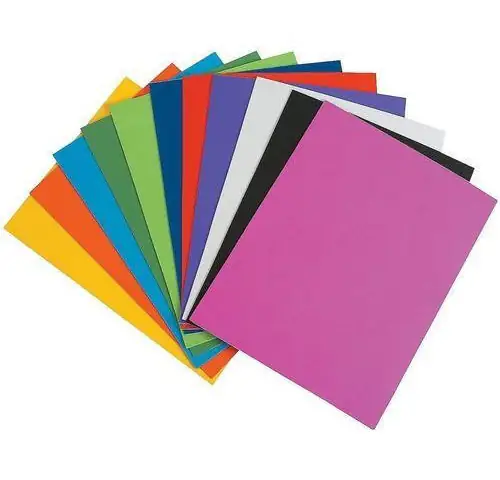
Coloured stock spans a wide range in practice, from light sheet weights used for craft, inserts and flyers up to card weights used for covers, folders, mounts and packaging. The two ends behave differently and are usually bought by different people, so it is worth being specific about weight as well as shade when enquiring.
The point most worth understanding before ordering is how the colour is carried. Stock that is dyed through the pulp shows the same shade on a cut or creased edge; stock that is coloured on the surface shows a white core when it is trimmed or folded. For anything that will be die-cut, creased or built into a box, the edge is visible and the difference matters.
Printing on coloured stock also needs planning. The sheet colour sits under the ink, so CMYK shifts against it and white cannot be printed conventionally — dark shades usually need foiling, screen printing or an opaque white. Tell us the shade, the grammage, the sheet size and the process, and we will quote from stock.
Specifications
- Range
- Assorted shades
- Weights
- Paper and card weights
- Colouring
- Dyed-through or surface-coloured — the difference shows at a cut or crease
- Printing
- CMYK shifts against the sheet colour; white needs foil, screen or opaque white
Typical applications
- Craft work
- Inserts and flyers
- Covers and folders
- Mounts
- Packaging inserts and wraps
Colour Paper — what buyers ask
Is coloured paper dyed through the sheet or only on the surface?
Both are sold, and the difference only shows when the sheet is cut or folded. Stock dyed through the pulp carries the same shade on a trimmed or creased edge; surface-coloured stock reveals a white or grey core the moment it is die-cut, scored or folded. For anything built into a box, a mount or a folded cover the edge is visible, so specify dyed-through and say what the job is.
What gsm coloured paper is used for craft versus for covers?
Lighter sheet weights go into craft, inserts, flyers and linings, where the paper is cut, glued and folded easily. Card weights — above roughly 200 gsm, where a sheet stops behaving as paper and starts holding a crease — go into covers, folders, mounts and packaging. Many shades are made across both, so specify weight and shade together rather than shade alone.
Will coloured paper fade in sunlight?
Most dyed papers lose some intensity under prolonged direct sunlight, and bright and fluorescent shades fade faster than muted ones. For indoor use, print, packaging and display over a normal product life this is rarely an issue. If the piece sits in a shop window or outdoors, say so when enquiring, because lightfastness varies between shades and between mills.
Can coloured paper be creased and folded without cracking?
At paper weights, generally yes. At card weights the risk is cracking along the fold, which shows as a pale line where a surface-coloured sheet splits. Scoring properly before folding, folding with the grain and choosing dyed-through stock all reduce it. Tell us the grammage and whether the job is machine-creased and the right stock can be matched.
What is the difference between coloured paper and coloured card?
Weight, and what the sheet can then do. Below roughly 200 gsm the stock behaves as paper — it folds, feeds and prints as a flexible sheet. Above it, it is card: rigid enough to hold a crease and stand as a cover, folder or mount. Many shades run across both weights, so a job needing matched colour in paper and card is usually achievable from one range.