Synthetic Paper — Waterproof Stock, Wholesale in Delhi
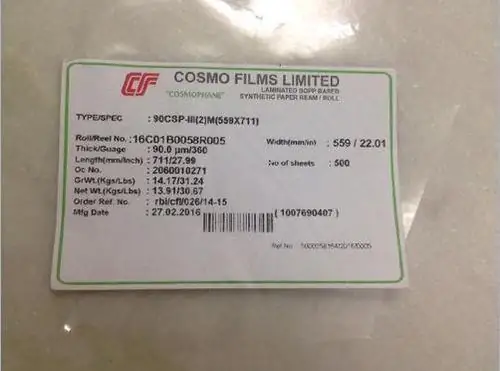
Synthetic paper is not paper. It is a polymer sheet — usually polypropylene or high-density polyethylene, extruded and surface-treated — engineered to run through a printing press and take ink like a coated stock while behaving like a plastic film in service. It does not absorb water, does not cockle in humidity, and does not tear along a fold. The Indian trade often files it under the same heading as NTR, and the two overlap, but the distinction worth holding is that synthetic paper solves a moisture and weather problem first.
It is specified where an ordinary label or document is already failing: outdoor and cold-chain labels, nursery and plant tags, chemical drum markings, machine instruction plates, maps, menu cards that get wiped down, and tags that live outside. Because it is a film, it is quoted by micron as well as gsm, and press behaviour differs from paper — ink systems and drying need to suit the substrate. Tell us the end use, the press and the quantity, and we will match the grade. Wholesale supply from New Delhi across Delhi NCR and India.
Specifications
- Material
- Polymer sheet — polypropylene or high-density polyethylene, extruded and surface-treated
- Properties
- Waterproof, tear-resistant, does not cockle in humidity
- Quoted by
- Micron as well as gsm
- Trade naming
- Often listed alongside NTR in Indian listings
- Printing
- Runs like a coated stock; ink and drying must suit a film
Typical applications
- Outdoor and cold-chain labels
- Nursery and plant tags
- Chemical drum markings
- Machine instruction plates
- Maps
- Menu cards that get wiped down
Synthetic Paper — what buyers ask
What is synthetic paper made of?
It is a polymer, not fibre — usually polypropylene, sometimes high-density polyethylene, extruded into a sheet and surface-treated so it accepts ink. That surface treatment is what makes it behave like a coated paper on press rather than like a bare plastic film. Because there is no fibre, there is nothing to absorb water and nothing along which a tear can propagate.
Is synthetic paper waterproof or just water-resistant?
Waterproof, in the sense that the sheet itself does not absorb water, soften, cockle or lose strength when wet. What can still fail is the printing: whether the image survives immersion, abrasion or chemicals depends on the ink system, the drying and any overlaminate rather than on the substrate. If the label goes into a wash-down or immersion environment, say so when enquiring.
Can you print on synthetic paper with a normal offset press?
Yes, with adjustments. Synthetic runs on conventional offset, but a non-absorbent surface means ink cannot dry by absorption — oxidative or UV-curing systems and longer set-off times are usual, and static and sheet feed need attention. Digital and screen printing work on it too. Tell us the press and ink system when enquiring so the grade can be matched to it.
What gsm or micron does synthetic paper come in?
Because it is a film it is specified in microns as often as in gsm, and the two do not convert cleanly between grades since polymer densities differ. Thinner stock goes into labels and wraps, heavier stock into tags, cards and documents that must survive handling. Give the application and the finished size rather than a number and the right caliper can be matched.
Does synthetic paper need special ink or drying?
Usually yes. A polymer surface does not absorb ink, so conventional absorption drying does not happen — UV-curing or oxidative ink systems are the normal answer on offset, and dwell time between colours is longer. Toner-based digital printing needs a grade rated for fuser heat, since some films distort. Confirm the press, the ink system and any lamination before ordering.
Is synthetic paper recyclable?
It is recyclable as a plastic, not as paper. Being polypropylene or polyethylene it belongs in a plastics stream and will contaminate a paper recycling batch if mixed in. That matters where a pack or label is being designed for recyclability — a paper-based label on a paper pack recycles more simply. Where the alternative is a label that fails in service, durability may still decide it.