Wrapping & Interleaving Tissue Paper — Wholesale in Delhi
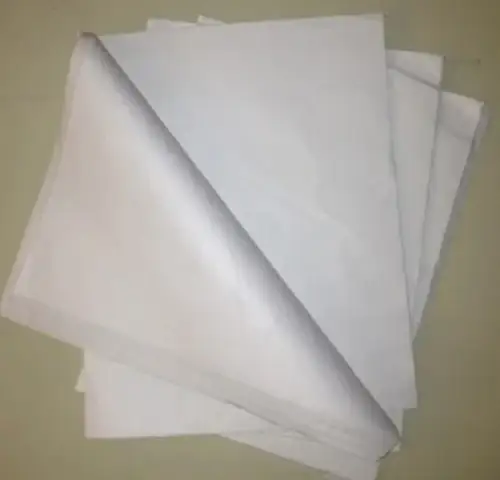
First, a clarification worth making up front: this is packaging tissue, not hygiene tissue. Sigma supplies the fine, soft, low-grammage sheet used to wrap, cushion and interleave goods — the trade grades usually described as MG (machine glazed, one glossy side) or MF (machine finished, matt both sides). It is not napkin, facial or toilet tissue.
Its jobs are protective and presentational. Garment exporters and retailers interleave folded garments with it to stop crease marks and dye transfer. Shoe, glassware and ceramics packers use it as a cushioning wrap inside cartons. Printers and binders use it to interleave freshly printed or foiled sheets so ink does not set off. Retail and gifting use it as the visible inner wrap inside a box or bag.
It is quoted in the region of 17–20 gsm, supplied in reels for machine packing or in cut sheets for hand wrapping, and available in white, natural and colours. Where the contents are sensitive to acid migration, an acid-free grade should be specified — say so when enquiring.
Specifications
- Type
- Wrapping and interleaving tissue — not hygiene tissue
- Grades
- MG (machine glazed, one glossy side) and MF (machine finished, matt both sides)
- Form
- Reels for machine packing, cut sheets for hand wrapping
- Shades
- White, natural and colours
Typical applications
- Interleaving folded garments against crease marks and dye transfer
- Cushioning wrap for shoes, glassware and ceramics
- Interleaving freshly printed or foiled sheets to prevent set-off
- Inner wrap inside retail boxes and bags
- Gift wrapping
Tissue Paper — what buyers ask
What is MG tissue paper?
MG stands for machine glazed. The tissue is dried against a large polished cylinder, which leaves one side smooth and glossy and the other matt. That glazed face is what gives wrapping tissue its slip and its finished look inside a box or bag. MG is the grade most wrapping and interleaving tissue is made in.
What is the difference between MG and MF tissue paper?
The drying method, and therefore the surface. MG — machine glazed — is dried against a polished cylinder and has one glossy side and one matt. MF — machine finished — is matt on both sides with no glazed face. MG is usual where the tissue is seen, as in retail wrapping; MF where it is purely functional, interleaving and cushioning inside a carton.
What gsm is wrapping tissue paper?
The market generally quotes wrapping and interleaving tissue in the region of 17-20 gsm, light enough to drape and fold around an object without adding bulk. Heavier tissue grades are made for cushioning and for interleaving heavy sheets. Confirm the current grade and grammage when enquiring, and say whether the tissue is for machine packing or hand wrapping.
Is acid-free tissue paper necessary for garment and archival packing?
It matters where the contents are sensitive to acid migration — textiles stored long term, silk and wool, photographs, artwork and documents. Ordinary tissue can yellow and, over time, mark what it touches. For short-cycle retail packing and shipping protection it is generally unnecessary. If the packing is archival or the goods sit in storage for months, specify an acid-free grade when enquiring.
Is wrapping tissue the same as the tissue used for napkins?
No. Napkin, facial and toilet tissue are hygiene grades, made soft and absorbent, usually creped and often multi-ply. Wrapping tissue is a fine, light packaging sheet made to drape, protect and present. They share a name and little else. The stock described here is the packaging grade — hygiene tissue is a different product from a different kind of supplier.