Textured Paper & Board Supplier in Delhi — 120 gsm and 300 gsm
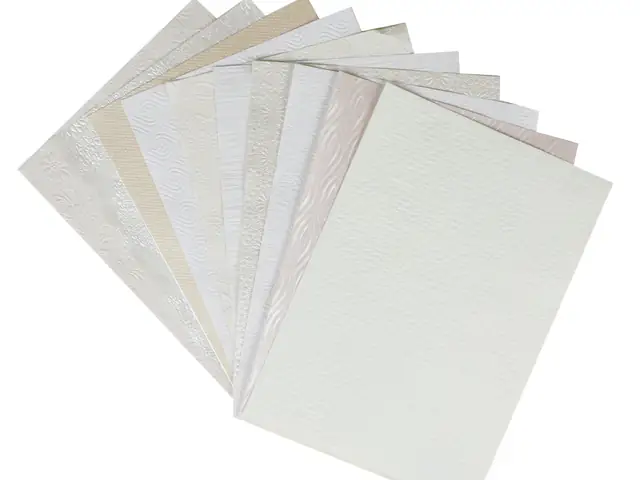
Textured paper carries an embossed or felt-marked surface pattern instead of a smooth finish. Sigma Enterprises stocks more than 50 textures in two working weights — 120 gsm as paper and 300 gsm as board — and supplies them wholesale from Ramesh Nagar, New Delhi to printers, wedding-card makers, packaging converters and stationers across Delhi NCR and India. The common finishes are felt, laid and linen, alongside hammered, ripple and sand-grain patterns; the choice is usually made by hand rather than off a spec sheet, because texture is judged by feel as much as by sight. The 120 gsm weight goes into letterheads, menus, certificates, inserts and invitation sheets; the 300 gsm board into covers, wedding cards, folders, tags and premium packaging wraps. Textured stock is uncoated, so it takes ink by absorption and prints softer than art paper — line work, foiling, letterpress and embossing suit it better than dense photographic images, and digital toner behaves differently across deep textures than across shallow ones. Tell us texture, weight, shade and quantity.
Specifications
- Weights
- 120 gsm paper and 300 gsm board
- Textures
- More than 50, including felt, laid, linen, hammered, ripple and sand grain
- Surface
- Uncoated — embossed or felt-marked
- Suits
- Line work, foiling, letterpress and embossing
Typical applications
- Wedding cards and invitations
- Letterheads and menus
- Certificates and inserts
- Book and folder covers
- Tags
- Premium packaging wraps
Textured Paper — what buyers ask
What is the difference between laid and linen paper?
The pattern, and how it is made. Laid paper carries fine parallel lines with wider chain lines crossing them, an impression left by the wire in traditional papermaking, and reads as classical and formal. Linen carries a fine cross-hatched weave resembling cloth, and reads softer and more tactile. Both are shallow textures, so both print more predictably than deep hammered or sand-grain finishes.
What gsm paper is used for wedding cards?
The 300 gsm board weight for the card itself — it holds a crease, stands up in the hand and carries foil and embossing without buckling. The 120 gsm paper weight is used for the inserts, RSVP sheets and interleaves in the same suite. Because texture is judged by feel, most card makers pick the finish by hand rather than from a specification.
Can textured paper be printed on digitally?
Yes, with a caveat about depth. Digital toner sits on the surface rather than soaking in, so on shallow textures such as linen and laid it lays down evenly, while on deep hammered or sand-grain patterns coverage can break up in the valleys of the emboss and solids look mottled. Run a test sheet on the actual stock before committing a run.
What is felt finish paper?
Felt finish is a soft, evenly mottled surface pressed into the sheet by a textured felt while the paper is still wet, rather than embossed afterwards. The result is a subtle, hand-made feel with no repeating pattern. It is a favourite for invitations, certificates and premium covers because it reads as crafted without being visually busy, and it takes letterpress particularly well.
Is textured paper good for foiling and embossing?
It suits both, and is often chosen for them. Because the stock is uncoated and the surface already carries relief, foil and blind embossing read as deliberate rather than fighting the sheet, and the 300 gsm board weight has the substance to take a die without buckling. Deep textures need more foil pressure than shallow ones — tell your finisher which texture is being used.